40 forces that will shape Social Security in Uganda
Tuesday, July 28 2026 1:07 pm
By Julius Businge, Financial Journalist



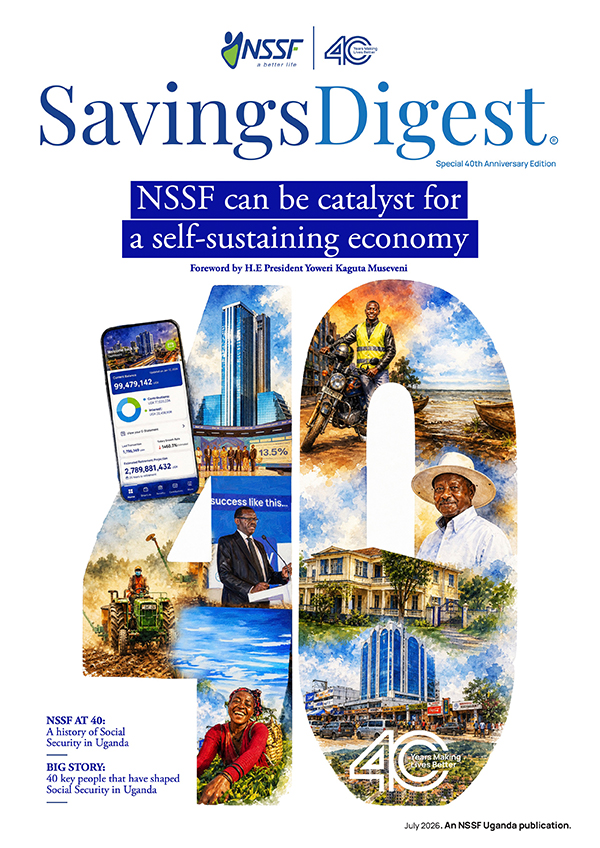
As National Social Security Fund (NSSF) marks 40 years of existence, regulators, policymakers, and industry leaders say the country’s social security sector is entering a new phase—one defined by regulatory reform, digital innovation, investment diversification, and expanded coverage to millions of workers previously excluded from formal retirement systems.
Uganda’s social security framework has evolved steadily over the decades. From early pension arrangements introduced during the colonial era to the establishment of the NSSF in 1967 and its reconstitution under the 1985 Act, the system has grown into a multi-layered structure comprising the NSSF, public service pensions, private retirement benefits schemes regulated by the Uganda Retirement Benefits Regulatory Authority (URBRA), and targeted social assistance programmes.
The NSSF, now the country’s largest long-term savings institution, collects mandatory contributions, invests funds across fixed income, equities, and real estate, and pays benefits including age, withdrawal, survivor, invalidity, and midterm benefits. Over the past decade, the Fund has undergone significant transformation under strategic plans such as Vision 2025 and now Vision 2035, which aim to expand coverage and grow assets under management while maintaining strong returns and governance standards.
Against this backdrop, this article highlights 40 (forty) key forces that are likely to shape the direction of social security in Uganda over the next decade.
Public pension reform and sustainability
One of the most significant structural shifts is the planned rollout of the contributory Public Service Pension Fund (PSPF), designed to replace the current non-contributory, budget-funded pension arrangement. Under the proposed framework, employees will contribute 5 percent of their gross salary, while government will contribute 10 percent.
Mary Grace Mugasa, State Minister for Public Service, explained: “In respect of an employee contribution, deduct from the salary of the employee five percent of the gross salary and in respect of an employer’s contribution, contribute 10% of the gross salary of an employee.”
Public Service Minister Muruli Mukasa has previously underscored the urgency of reform, noting: “As a result of the sustainability challenge, the current public service pension service scheme has continued to suffer shortfalls in funding, which ultimately translate into accumulated pension and gratuity arrears for pensioners.”
The transition to a funded contributory system is expected to enhance sustainability, reduce pension arrears, and align Uganda’s public service with international best practices recommended by global bodies such as the World Bank and the International Labour Organization.
Digital transformation and compliance
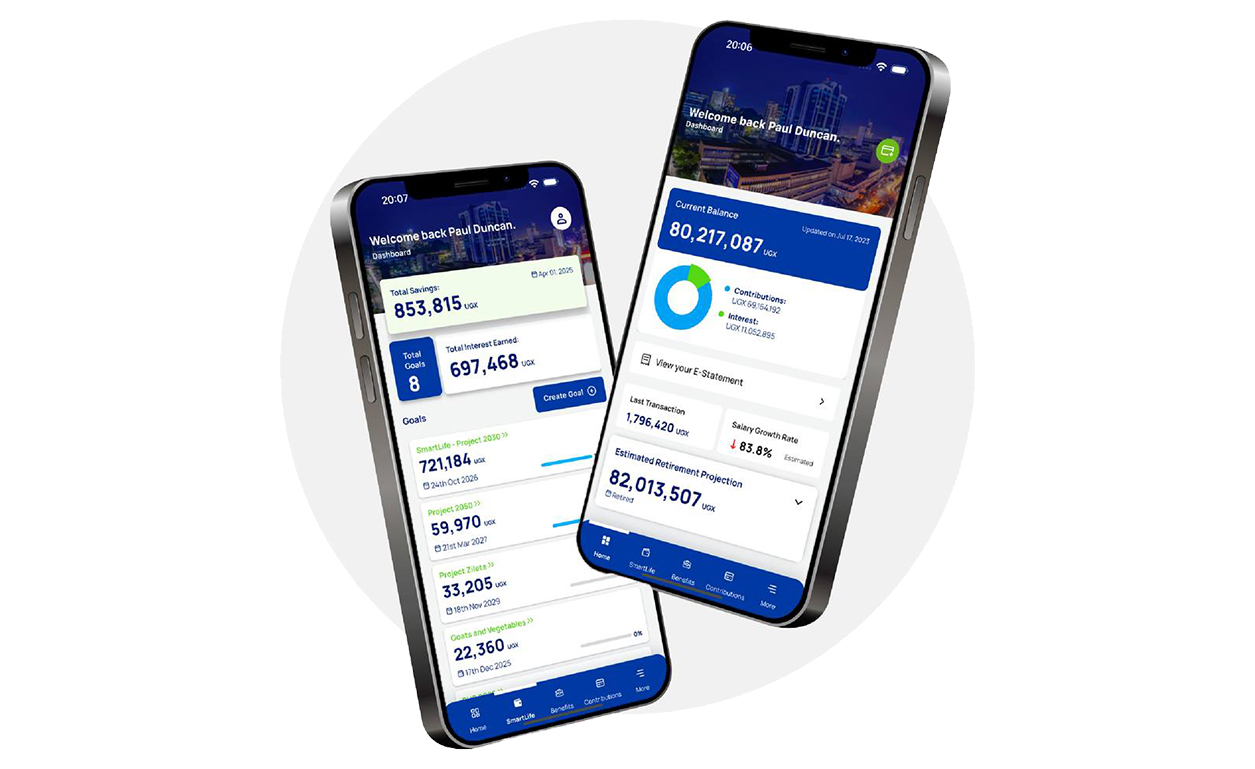
Technology is emerging as one of the most powerful drivers of change. Retirement schemes are increasingly deploying mobile applications, web-based dashboards, artificial intelligence-powered customer support tools, and integrated payment platforms to improve member access and transparency.
Daisy Lynda Nabakooza, Chief Manager Supervision and Market Conduct at URBRA, said: “A major priority is improving access for informal sector workers, who make up a significant portion of Uganda’s workforce. New initiatives are enabling these individuals to access social security and broader financial services through mobile money and digital platforms.”
Digitalisation is also strengthening employer compliance. Automated reporting systems, data integration between regulators and schemes, and real-time monitoring tools are expected to reduce under-reporting of contributions and improve accountability.
Expansion of voluntary and informal-sector savings
Recent amendments to the NSSF Act opened the Fund to voluntary contributors, including workers in small and growing enterprises and the informal sector. Flexible entry thresholds and mobile-based contribution options are expected to significantly expand coverage.
Uganda’s working population is estimated at about 15 million people, yet only a fraction is active contributors to formal retirement schemes. Vision 2035 targets increasing coverage to at least 50 percent of the working population while growing assets to Ugx 50 trillion. Achieving this will depend heavily on onboarding farmers, boda boda riders, traders, and micro-entrepreneurs.
Investment diversification and capital markets
Pension funds are among the largest pools of long-term capital in emerging markets. In Uganda, a substantial share of retirement savings has traditionally been invested in government securities due to their relative safety. However, regulators and policymakers are encouraging broader diversification.
Future growth is expected in infrastructure bonds, affordable housing projects for members, private equity investments, and public-private partnerships aligned with national development priorities. Increased participation in domestic capital markets is also expected to deepen liquidity and stimulate private-sector growth.
Macroeconomic influences
Macroeconomic factors will continue to shape the performance of social security funds. Interest-rate movements affect returns on fixed-income investments. Inflation influences the real value of member savings. Exchange-rate fluctuations can impact foreign-denominated assets. Economic growth and job creation determine contribution volumes.
According to data from the Bank of Uganda and the Ministry of Finance, macroeconomic stability remains central to sustaining pension fund returns. Sustained GDP growth, moderate inflation, and stable exchange rates will support long-term investment planning.
Governance, transparency, and regulation
URBRA’s risk-based supervision model is expected to strengthen oversight of trustees, fund managers, custodians, and administrators. Enhanced governance standards, transparent reporting, and regular audits are essential to maintaining member confidence.
The NSSF’s experience over the past decade—marked by unqualified audit opinions and annual member meetings—has reinforced the importance of transparency and accountability in restoring public trust.
Sustainability and ESG priorities
Globally, pension funds are increasingly aligning investment strategies with environmental, social, and governance (ESG) principles. In Uganda, green real estate projects, climate-aligned investments, and social impact funding are expected to gain momentum.
Allocating a portion of assets to social investments—while ensuring reasonable returns—may support affordable housing, SME growth, and youth employment, linking retirement savings directly to national development.
Building a savings culture
Perhaps the most enduring force shaping social security will be behavioural change. Uganda’s domestic long-term savings-to-GDP ratio remains relatively low compared to fast-growing economies such as Vietnam. Expanding financial literacy campaigns, employer engagement initiatives, media outreach, and community education programmes will be critical to nurturing a culture of long-term saving.
As NSSF celebrates 40 years, the sector stands at a critical moment. The next decade will likely be defined by digital access, broader coverage, diversified investments, stronger governance, and deeper integration of retirement savings into Uganda’s economic transformation agenda.