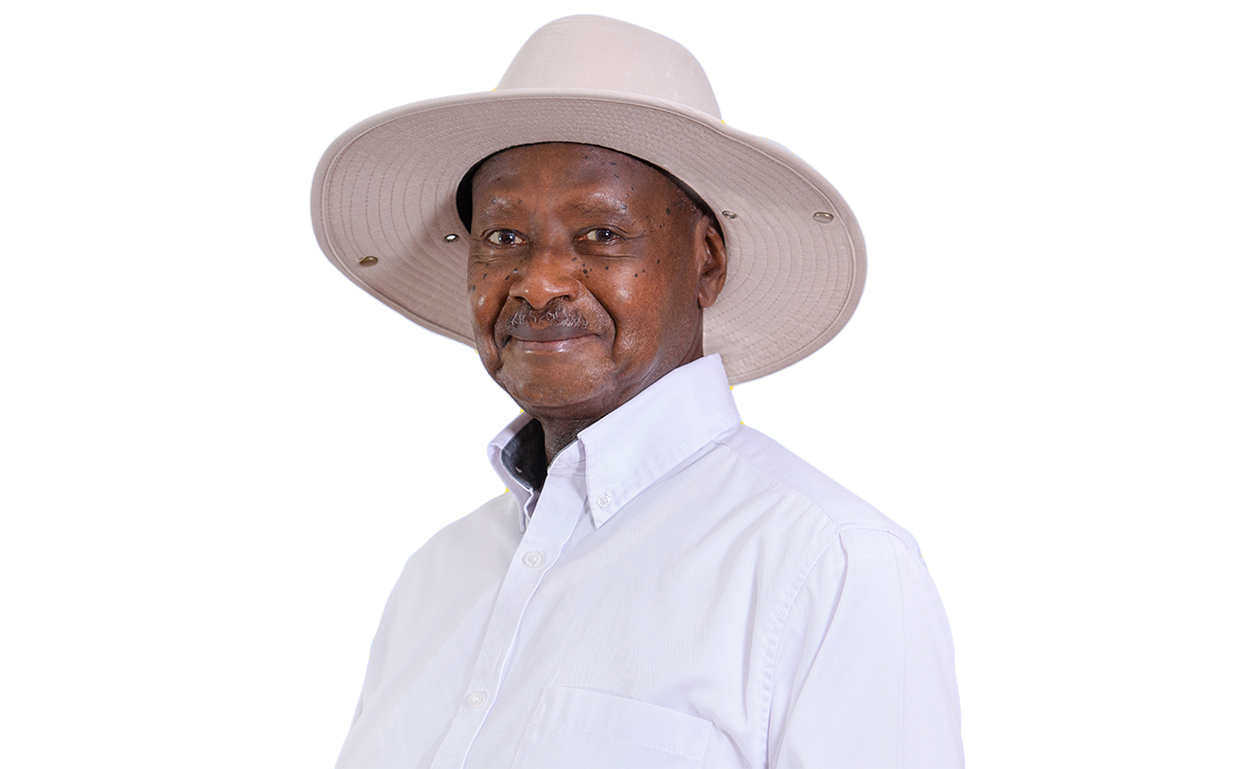
My 35 years working at NSSF
Tuesday, July 28 2026 12:07 pm
By Francis Baryahabwa, Administration Manager




When you joined, what was the organisation like in its early years?
I joined in 1992. The NSSF ACT CAP 222 of 1985,put 7years earlier, was in the process of implementation- in terms of recruiting staff- an MD, DMD and CS had been recruited in 1990 who in turn were recruiting other staff with the support of also a newly appointed board. Many staff had been inherited from the ministry of Labour where the Fund had been situated as a ministry department with a director of social security reporting to the permanent secretary. So things were in transition and slow. Supervision was also highly hierarchical with a boss being a boss. Promotions were largely based on seniority.
How different was the work environment then compared to now?
The work environment was slow and only moving from civil service fashion. The Head office was in a very old building on Kampala Road called Ambassador house where access was through shops on the ground floor, then through a corridor to the 2rd floor. Kampala branch where I was based as a compliance officer was on the first floor. Kampala road where the office was based was typically very noisy with traffic which would be felt in the office
The infrastructure now is modern with everything very clean and good including having air-condition.
The office infrastructure was very old- very old chairs, tables, cupboards and everything.
There is less hierarchy now as you can easily try to see HODs, CS, DMD, MD without first making an appointment.
What challenges did the organisation face in those early years?
Operations were largely manual including the use of typewriters. There were no computers which came later on as technology was not as advanced to enable. There was no accountability to savers and members in terms of members statements as there was no systems to capture and issue statements which only came in limited operation in 1994 (SSDMS- Social Security Data Management System). The field and public was harsh as a result and resistant to saving. The interest rate declared those years was very low- about 3% or lower.
The performance Appraisal Management system was based on the civil service model with an Annual confidential report filed on a staff without interfacing with a staff and you could not know what a supervisor has put in there. Salary increment were through an annual inflationary adjustment of usually 10% across board per annum regardless of individual contribution to the performance.
What would surprise today’s staff about how things were done back then?
No discussion of appraisals. Fewer vehicles in the field and increased use of motorcycles by field staff. No members statements Issuance till later years. Highly hierarchical management and limited approachability. Benefits claims payments taking a very long time 3months plus on average. Due to the currency devaluation of 1987 the benefits amounts paid were very low with the trial balance payment of only UGX 154 not enough to transport a claimant to come and pick the money.
These were in cheques and there were many stale cheques those years due to claimants’ reluctance to pick the meagre payments.
The field staff-me inclusive- were largely money minded (not records minded) and would collect many cheques without corresponding schedules because credit was going to how much money a branch collected and hence the unposted contributions and growth of the suspense contributions scenario.
Most of the branches were also located in old, dilapidated buildings across the country- many near or in the buildings that hosted the ministry of labour.
Which transformation do you feel had the greatest impact(positive) on the organisation?
By 1995 more staff not inherited from the civil service were getting recruited- University graduates-accountants, Auditors, compliance and contribution officers, customer service officers, legal officers, Public relations officers etc, so a fresh breeze of air started.
Nontraditional benefits began to come from around 1996 like housing advance for 6 months to 1 year, Home ownership loan, Co-ownership of motorcycles and cars and the Free medical insurance scheme. Also, the Fund offices started to shift away from old civil service building to modern buildings including the head office. New furniture also started being purchased. This greatly increased morale and productivity and improved the working environment.
How has the organisation’s mission or mandate evolved since you joined?
The main mandate when we joined was to register employers, then employees(members), sensitization, collection of contributions, investing the collections and payment of benefits in that order. Those years were using a lot the enforcement model as there was a lot of resistance in the field. Each field officer and manager had an inspection/compliance enforcement certificate.
The RM(Relationship Manager) of those years was called Compliance Officer while the Area Manager was called District Compliance Officer
This model changed in later years to emphasize Relationship building and also the Fund started having Annual Members meetings as consultative forums and also delved into Real estate development by buying investment properties like at Mpumudde in Jinja, National Housing Bungalows at Bukoto from National housing corporation, A house in Naguru and then former Udyam house (Social Security house) on jinja road.
It also started to buy big lands for housing development projects at Nsimbe and Lubowa. This was a big mandate addition to alleviate commercial and housing deficit in the economy than only traditional payment of benefits.
Are there leadership decisions that you believe shaped the organisation’s future?
Yes. Completion of the construction of workers house to have a permanent place as NSSF Head office as we had shifted twice from Ambassador house and then Lumumba Avenue.
Also the change from buying finished houses for rent like at kisugu, mbuya into constructing own houses for sale like at Mbuya, lubowa and now Temangalo changed the approach. I believe this opened another revenue generating stream than investing only contributions in the banks/money markets etc.
All inhouse given and supervised loans and housing advances stopped as well as lending money to staff against the security of the SPF.
Loaning was now outsourced through the bank and interest was now levied on these loans.
What role did staff play in navigating periods of change or reform?
Management became more consultative and involving of staff. Several committees would be set up- like the tender/purchasing committee that worked with the powerful purchasing officer. There was also the IMIS (Integrated Management information System) committee to help implement technology projects in TES Department rather than having the head of IT working alone. A senior driver was also put in place to work with the powerful transport officer- to check on the repairs and supervise Drivers and transport generally.
What values have remained constant despite all the changes?
Insatiability has remained a problem. As more non traditional benefits came through, staff always want more like there is self entitlement.
Driving and owning performance also remains a problem with many people especially in the customer focus area not putting a customer to the fore
What makes you proud to say you work here?
The Brand visibility has grown and continues to stand out. Many people who used to curse us for working here now wish they work here. The job security. The TATs for all the services have improved a lot and continue to improve. The competitive interest rate being offered etc.
Are there traditions, practices, or stories that only long-serving staff would know?
Yes. Insourcing (rather than outsourcing) of services used to be the practice for a long time. Services like Tea provision and preparation was by Fund employed tea makers, very many employed office messengers running the errands including mail service till they were re-purposed to drivers. Security- the security guards were Fund staff and were a number.
Cleaners were also staff on the payroll.
Operationally a benefit claim especially Survivors benefit would take a very long time while members statements were not available for years owing to lack of technology to capture and process them.
Those years of “bosses” of SIR, MADAM also had a culture and hierarchy of secretaries. There was a secretary to every area manager, a secretary to every head of Department and off course as it is now a secretary to statutory appointees.
You needed to see a secretary to seek an appointment to see the HOD while at a branch where I as area manager of several branches -a secretary to the Area manager/District compliance officer- would schedule you to see the area manager. This stopped in 2010 when secretaries were removed and repurposed- except for PAs of the statutory Appointees- CS, DMD, MD. It was offensive to the MD if you referred or called him SIR.
Now the system is too open that you do not need to fix an appointment at branch and HOD level- even with the statutory appointees. You just walk in
What crisis or difficult period do you believe tested the organisation?
The constant changes in Management at the Top- starting from around 1998 when the inception management changed. There after Top management would change at an average of every 3yrs till the year 2010. The main reason was real estate development projects that were starting to be implemented and purchase of land and allegations of financial impropriety around them.
I was in the branches as Area manager and days and weeks of screaming headlines in the newspaper on those alleged scandals would make us hide in the offices and not venture in the field. This would set us many miles backwards from what we had been achieving.
How did the Fund navigate it?
At that time the Fund PR function was not well constituted but in any case, left the matter to the Ministry of Gender to refute or deny the allegations. Those years we would be told not to talk much about what was screaming in the media and to refer any enquiries to head office.
In most times it would be the line minister making the changes and an investigation would be conducted including by Parliament. With time the new leader(s) including a new board, would settle down and the Fund stories would get out of the media.
We would also resume normal business including venturing out into the Field.
Which achievement would you say makes you feel most proud to be part of this institution?
I feel proud about the Fund because it has shaped me into what I am today. It has opened for me networks and opportunities.
Have walked journeys with it and contributed to the developments and improvements along the way:
• Right from School as Compliance Officer, Area Manager of several Branches, Regional Manager, Area Network Manager, Operations Manager, Deputy Chief Operations Officer, Ag. Chief Operations Officer and Administration Manager/ OSH Coordinator. This has opened up my horizons and met many people across the country. I have also contributed a lot to the operations like the demarcating of the Kampala branches and the zones which used to have ambiguities. Most of the benefit forms I designed over the years are still in use today.
• I was Chairman of the NSSF Contracts Committee for six years and I used to travel to the East Africa Procurement forum conference every year rotational to all the countries that comprise the EAC. I made many friends in the EAC region as a result who continue to be valuable.
Also as Chairman of the contracts committee, we revived to completion many stalled and challenging real estate development projects. These included Lubowa, Mbuya, solving the Nsimbe joint venture and successfully exiting a share holder and owning the land and others.
• I represented NSSF on two Uganda Government National steering Committees- the National Health Insurance Formulation committee, the Competitiveness Enterprise development steering committee which created one stop centres in the country. I met many people and networked with many Government official from different settings. These have continued to be useful especially during the Corvid 19 response era, The ongoing NIRA ID renewals which contacts in turn benefitted the Fund.
• Have been able to educate my family through working at NSSF over the years and these currently include a lawyer and a medical doctor who is about the finish.
In your view, what is the organisation’s most important contribution over the last 40 years?
Growth over the years and being a major contributor to the economy in terms of Assets mobilization. The increasing involvement in real estate projects development have also helped reduce the rentable commercial space in Kampala, Mbarara, Jinja and another coming up in Mbale
The housing units that have been built in Lubowa, Temangalo, Mbuya are also contributing to the economy.
Availing a platform for saving has been great- many savers are now reaping big savings thus sustaining many livelihoods and general economic development.
What gives you confidence about the next 10 years?
The recent strong venture into the largely untapped voluntary contributions space is already doing wanders with platforms like smart flexi catching up wildly. The interest rate is also rising all the time thus creating more value to the members.
The strong entry in the housing deficit market should in the next few years pull the Fund to the space of massive housing estates like the ones we have seen in Ghana, Tanzania and Rwanda done by the saving schemes of these countries.
What would you like the organisation to be remembered for at its 50th anniversary?
Resilience and turnaround. From Paying a benefit claim after 90 days to paying a claim in one day.
Efficiencies like updating member contributions timely. Evolution from hopelessness to a very strong brand able to attract and recruit the best of the employees in the market.