40 key personalities that have shaped Social Security in Uganda
Tuesday, July 28 2026 11:48 am
By



President Yoweri Kaguta Museveni
President Yoweri Museveni has made several key decisions that have enabled the growth and transformation of the NSSF over the last 40 years. The most recent, and perhaps most significant, was his assent to the NSSF Amendment Act in January 2022, which introduced legal reforms to the NSSF in 40 years. The landmark law expanded the Fund’s mandate, mandatory coverage for all employers, reformed governance, introduced new products, mid-term access benefit, and enhanced non-compliance penalties for defaulting employers.
The President also shadowed the Fund from being broken up in 2011, wondering why a successful public entity needed to be liberalized, which marked the end of the liberalization efforts and led to a decision by the Cabinet to withdraw the NSSF Liberalisation Bill from Parliament.
Lastly, in 2003, the President ordered a transfer of the supervision of the Fund from the Ministry of Gender to the Ministry of Finance, Planning & Economic Development, which ushered in an era of financial prudence, transparency, and impactful investments.
Matia Kasaija
Hon Kasaija is the Minister of Finance, Planning and Economic Development, who has been a supervisor of the Fund since his appointment in 2016. He was the sole supervising minister until January 2022, when new legislation introduced dual supervision, alongside the Minister of Gender, Labour & Social Development. Ho Kasaija is credited with ensuring leadership stability at the Fund after years of high turnover of top leadership, as well as ensuring financial prudence at the Fund.
Under his supervision, the Fund has grown to contribute about 12% to the country’s GDP, as well as become the leading domestic lender to the Government of Uganda. The Fund diversified its investment portfolio, increasing its equity investments and regional exposure within East Africa. The Fund, however, has maintained a large majority of its investments in Uganda.
He also declared the highest interest ever paid by the Fund (15%) in Financial Year 2017/2028 and has consistently declared competitive interest rates throughout his tenure as minister.
Janet Mukwaaya
The recent NSSF reforms can be partly attributed to Janat Mukwaya, who, while serving as Uganda’s Minister for Gender, Labour and Social Development, was the primary mover of the National Social Security Fund (Amendment) Bill in 2019. This followed cabinet approval during its sitting on 5th March 2018, chaired by HE President Yoweri Museveni, which approved the Principles to Amend the National Social Security Fund Act.
The principles included expanding social security coverage, enhancing efficiency and effectiveness in investment, providing for the introduction of new benefits, improving governance, and streamlining the appointment of staff to key positions within the Fund. Cabinet also approved amendments, which made the bill that sought to amend the NSSF Act, to establish a stakeholder board; to provide for mandatory contributions by all workers, provide for voluntary contributions, provide for midterm access to members’ contributions, a five-year term of office for the managing director and deputy managing director; in-house fund management, and introduction of new benefits.
Anthony Butele
It was Anthony Butele, then Minister of Labour, that tabled the on November 22, 1984, the National Social Security Fund Bill to the Parliament. The Bill sought to repeal the Social Security Act No 21 of 1967 and the Social Security Amendment Decree No. 33 of 1972 to create an autonomous Fund. From November 1984 to early 1985, the Bill was debated by Parliament.
Hon. Kafumbe-Mukasa
The then MP for Mpigi Central, while contributing in the House, proposed the second reading of the NSSF Bill 1984. In his deliberation, Kafumbe-Mukasa said: “On the proposed amendment of the NSSF Bill, Mr Speaker Sir, I beg to move that the NSSF Bill 1984 be read for the Second time.” He continued: “Mr Speaker Sir, the subject of the Bill is to transform the present NSSF into an autonomous corporation to ensure secure, profitable, and effective financial management of the Fund for the benefit of the workers in particular and the country at large. The Bill seeks to repeal the Social Security Act No. 21 of 1967 and the Social Security (Amendment) Decree No. 33 of 1972.”
Gerald Ssendaula
In 2004, Ssendaula oversaw the transfer of NSSF from the Ministry of Gender, Labour, and Social Development to the Ministry of Finance to improve the management of workers’ savings, following a directive from President Yoweri Museveni in 2004.
He also oversaw a 2004 overhaul of the Fund’s then leadership following governance challenges. Later, he was one of the former government officials that suppoprted the Fund’s investment in electricity distribution firm Umeme Limited.
Jaberi Bidandi Ssali
Hon Bidandi Ssali was the first supervisor of the new NSSF under the NRM government as the Minister of Labour from 1986 to 1988. During his tenure, he oversaw a nascent NSSF and oversaw a Fund affected by the currency reform in 1978, when the government, under the Economic Recovery Program, introduced a new shilling, removed two zeros from the old currency, and imposed a 30% conversion tax.
Betty Amongi
Hon Amongi took over the NSSF reforms mantle following her appointment as Minister of Gender, Labour and Social Development in 2021. Under her watch, the NSSF Amendment Act was signed in January 2022, which introduced dual supervision, making her the Minister for Social Security. Hon Amongi issued regulations that operationalized the new Amendments: NSSF Voluntary (Contributions and Benefits) Regulations 2024, which enable workers to make flexible, additional savings beyond mandatory deductions. She also approved the Mid-term benefit terms and conditions that enabled savers to access the mid-term benefit.
Rt. Hon Francis Butagira
Rt. Hon Butagira presided over Parliament as Speaker during the parliamentary debate of the NSSF Bill from November 1984 to early 1985. On January 8, 1985, Parliament passed the National Social Security Fund Bill into law to provide for its membership the payment of contributions to, and the payment of benefits out of, the Fund and for other purposes connected. The enactment of that law was a significant step towards the transformation of the Social Security Fund management, membership, contribution rates, and investment opportunities. The law stood the test of time until it was amended in January 2022.
Rt. Hon Rebecca Kadaga
The legislative efforts to amend the NSSF Act started during Rt. Hon Kadaga’s stewardship as Speaker of Parliament, with the introduction of the NSSF Amendment Bill. She presided over Parliament during the first reading of the Bill. Kadaga also commissioned the Fund’s first real estate investment outside Kampala city – the Jinja City House in 2018, during which she called for more real estate investment in all regions in Uganda. Since then, the Fund has constructed Mbarara City House and Mbale City House, and plans to construct more City houses across the country.
Rt. Hon Jacob Oulanya
Rt. Hon was the Speaker of the 11th Parliament when the Bill was reintroduced, following the lapse of the previous Parliament. During his term, the NSSF National Social Security Fund (Amendment) Act, 2022, was introduced, debated, and passed. In particular, as Speaker He also called and pushed Parliament to fast track considertation of the Bill following delays. He issued an ultimatum to the government to bring back the proposed legislation and issued directives to the Finance and Gender Committees of Parliament to prioritise scrutiny of the Bill.
Rt. Hon Anita Among
Rt Hon Among was Deputy Speaker of Parliament when the NSSF Amendment Bill was introduced and presided over some sessions of Parliament as it debated the Bill, later passed into law. The amendments ushered in reforms of the Fund that expanded its mandate, streamlined governance, and introduced opportunities for products such as the Mid-term Access. She also instituted a parliamentary committee that inquired into the management of NSSF affairs.
Dr. Milton Obote
Although the idea to reform the SSF had been mooted before, former president Milton Obote promised to undo the Social Security (Amendment) Decree No. 33 of 1972 issued by Idi Amin, and turn the then Social Security Fund into an autonomous body managed out of the Ministry of Labour. He re-echoed the same policy proposal on Labour Day, May 1, 1981. The same proposal was mentioned again on the floor of Parliament in March 1982. In November 1984, a bill to formally establish the NSSF was tabled before Parliament.
Hon Flavia Kahahenda
As the Chairperson of the Committee on Gender, Labour, and Social Development, she led the parliamentary scrutiny and passage of the National Social Security Fund (NSSF) (Amendment) Act, 2021. NSSF Amendment Bill. She was the Woman Member of Parliament for Kyegegwa District. Her Committee’s report was adopted by Parliament, which paved the way for the passage of the Bill into the current NSSF Act (Cap 230).
Patrick John Muzaale
Prof. Muzaale was the pioneer Chairperson of the NSSF Board of Directors, who served for a year before handing over to Elly Karuhanga. He was instrumental in laying the governance foundation of the Fund, ensuring the necessary legal requirements were fulfilled as the Fund began operations post 1985.
Hon. Elly Karuhanga
Hon. Karuhanga was the Chairman Board of Directors from 1986 to 1990. Taking over from Prof Patrick Muzaale, Karuhanga found a Fund that was trying to find its footing. He is credited with having steered the Fund through the period of currency reform, when the savers were affected, along with the rest of the population. After the challenges of the currency reform, the Fund enjoyed some semblance of stability by the time Karuhanga handed over the reins to Dr Crispus Kiyonga.
Dr. Chrispus Kiyonga
Dr. Kiyonga is the longest-serving Chairman of the NSSF Board of Directors. He served from 1990 to 1998. He is credited with having overseen the resumption of construction of the Workers House, following years of delays. The project was completed by Roko Construction Limited and commissioned by President Yoweri Museveni on Labour Day in 2001.
Ivan Kyayonka
Ivan Kyayonka served as the Board Chairman of the National Social Security Fund (NSSF) Uganda from 2012 to May 2015. Kyayonka, the celebrated executive who had led Shell Uganda for many years, was appointed to promote good corporate governance and usher in a private sector mindset in the Fund’s operations to accelerate efficiency. During his tenure, he was forthright in his defense of the Fund’s equity investment in utility company Umeme Limited, arguing that the Fund had to move with the times and diversify its investment portfolio.
Vincent Ssekkonno
Public service veteran Vincent Ssekkonno served as the Board Chairman of the NSSF Uganda from 2009 to 2012 following appointment by then Minister of Finance, Syda Bbumba. Ssekkonno was instrumental in re-establishing the Fund’s direction following a few years of turbulence in 2008.
His board insisted on the Fund pursuing the protracted court case against Alcon International and Alcon Kenya, in spite of advice and insistence from various circles for the Fund to settle the case out of court. The case went all the way to the Supreme Court, which sent the dispute back to the High Court. The Fund ultimately prevailed after the High Court ruled in its favour.
Patrick Byabakama Kaberenge
He served as the NSSF Chairman of the Board of Directors for two terms from 2015 to 2021. He brought stability to the role and oversaw the Fund’s transformation as a result of Vision 2025. Kaberenge is credited with leading the charge at the Board level to rekindle the Fund’s real estate investment portfolio that was in abeyance for a number of years. Under his tenure, iconic projects like Solana Lifestyle & Residences, Citadel Mbuya Housing Project, and NSSF Pension Towers were started.
He was also a key proponent of mid-term access products to members of the Fund.
Dr. Peter Kimbowa
Dr. Kimbowa, a governance and management expert and trainer, was at the helm of the Fund as the Board Chairperson following his appointment in September 2021. During his tenure, the Fund recorded record growth. He is credited with having strengthened the Fund’s corporate governance structures during a period of sustained public scrutiny. During his tenure, he oversaw changes in the top management of the Fund.
Peninnah Tukamwesiga
Ms. Tukamwesiga is a current member of the NSSF Board of Directors representing workers through the Confederation of Free Trade Unions (COFTU). She is the longest-serving member of the NSSF Board, having been first appointed in 2015. In addition, she has served on 4 boards since her appointment (since 2015), and has served on 4 boards
James Marcus Rwabeire Baira
He was the pioneer Managing Director of the Fund after its establishment by an Act of Parliament in 1985, and after the March 1986 statutory instrument that operationalised the Act. He had been at the helm of the Fund the previous year. He is credited with establishing the operational foundation of the nascent institution to get it up and running.
Martin Bandeebire
Martin Bandebiire served as the Corporation Secretary of the NSSF for over 10 years. He is known for having steered the Fund during turbulent times, as acting Managing Director twice in 2007 and 2009-2010. During this time, he also served on the NSSF Board by virtue of his position as the Ag. Managing Director. He left the Fund in 2010 for private law practice.
Richard Byarugaba
Richard is the longest-serving Managing Director of the NSSF, having served for 10 years between 2010 and 2022. He is widely credited with turning around and transforming the NSSF into a multi-trillion shilling fund during his tenure, restoring public confidence and trust, as well as spearheading reforms that led to the amendment of the NSSF Act in 2022.
Under his leadership, the Fund also carried out a staff re-organisation, aligning human capital to the strategic objectives contained in the three-year Corporate Strategy (2011/12 – 2014/15), and “Vision 2025”, an ambitious 10-year Strategic Plan that was primarily focused on positioning the Fund as the social security provider of choice.
Vision 2025 marked a decade of stability and accelerated growth: Under his leadership, the NSSF’s value grew from confidence and approximately Shs1.7 trillion in 2011 to over Shs17 trillion by late 2022. He championed digital transformation and oversaw major real estate projects.
Patrick M. Ayota
Patrick Ayota is the current Managing Director of the NSSF, a role he assumed in 2023, having served as Deputy Managing Director since 2016. He has ensured continuity of the Fund following leadership changes in 2023, overseeing the execution of Vision 2025, and ensuring a smooth transition to Vision 2035. Under his tenure, the Fund has expanded its mandate because of reforms and expanded the investment horizon, not just for the benefit of members, but also for the country.
He has overseen the Fund’s positioning as a key partner to the government in the implementation of its economic development agenda. He has also championed the view that the Fund must create its own future, thus starting programmes like NSSF Hi-Innovator and intervention in agriculture.
Hon. Justice Benjamin Josses Odoki
In 2013, then-Chief Justice Benjamin Odoki authored a landmark lead judgment in the Supreme Court case involving the NSSF and Alcon International, which sent the case back to the High Court. The case centered on a multi-million dollar arbitral award previously granted to Alcon International for the termination of a contract to build the NSSF Head Office building, the Workers House in Kampala.
Justice Odoki and the Supreme Court bench overturned the arbitral award, ruling that it had been obtained through fraudulent information, and preserved the legal doctrine that any matter that is a result of fraud is null and void. The decision saved the NSSF (and its contributors’ savings) from paying approximately $8.8 million (at then-current rates) to Alcon.
Justice Musa Ssekaana
In November 2024, Justice Ssekaana overturned findings made by a Parliamentary Select Committee against NSSF’s Chief Financial Officer, Steven Mwanje, citing fairness violations during the committee’s inquiry, thereby upholding the right to a fair hearing. His ruling also called into question the fairness and findings of the committee.
During his time as a judge of the High Court, Justice presided over a few cases involving NSSF and issued landmark rulings. In October 2024, Justice Ssekaana dismissed a suit by Kenyan firm Alcon International seeking to recover property (plant and machinery) from NSSF. He ruled the claim was time-barred under the Limitation Act, as the company waited over 22 years to file after the initial 1998 dispute. His ruling preserved the NSSF Workers House, which was in danger of being entangled in the dispute. In April 2024, he dismissed a petition by former NSSF Managing Director Richard Byarugaba, who challenged the Minister of Gender’s decision not to renew his contract, preserving the administrative discretion of the appointing authority.
Justice Boniface Wamala
The Hon. Justice Boniface Wamala of the High Court of Uganda, Commercial Division, presided over a significant tax dispute case between the Fund and Uganda Revenue Authority. In November 2020, Justice Wamala delivered a landmark ruling in favor of the NSSF in a tax case against URA. The dispute centered on whether the interest the NSSF pays to its members annually is a deductible expense for income tax purposes. The Tax Appeals Tribunal had initially ruled against the NSSF, but Justice Wamala set aside that decision. He ruled that the interest paid to NSSF members is a deductible expense, meaning the NSSF was not liable for the disputed Shs42.5 billion (approximately $11 million USD) tax assessment. This is one of the most significant decisions, as it prevented a drastic reduction in the interest paid to NSSF savers annually.
E.M. Asia
Mr. Asia was part of the first leadership team as Deputy Managing Director, following the establishment of the Fund by an Act of Parliament in 1985, and after the March 1986 statutory instrument that operationalised the Act. Alongside James Baira, he helped set up its operational foundation.
Geraldine Ssali Busuulwa
Mrs. Busuulwa was the first female Deputy Managing Director of the NSSF and the first female Ag Managing Director. She is the only female top executive to lead the Fund, having acted in the position for over 10 months in 2014. She departed her role as Deputy Managing Director upon expiry of her contract in October 2017.
Paul Bwiso
As Chief Executive Officer of the Uganda Securities Exchange (USE), Paul Bwiso is a critical stakeholder in Uganda’s social security sector, given his role as head of the USE and the Chairman of the East African Securities Exchanges Association (EASEA). Over his tenure for the last 10 years, he has overseen various IPOs, in which the NSSF has been a significant participant. Todate, the Fund has invested over Ugx 3 trillion in the regional exchanges. He is a critical cog in value creation for NSSF members, working in partnership with various other actors to drive investment and regional capital markets development.
JB Kakooza
Lawyer Kakooza was a Corporation Secretary of the Fund in the 1990s and early 2000s. He was an ever-present figure at the National Social Security Fund as the Fund established a strong hold and began to expand. Whereas JB Kakooza was an early advocate of reforming the Fund, he was opposed to liberalisation of the social security sector snd break up of the Fund, a view that ultimately carried the day.
Gerald Paul Kasaato
Gerald Paul Kasaato is the current Deputy Managing Director of the NSSF Uganda. In his prior role as the Chief Investment Officer, he is credited with modernizing the Fund’s investment approach, pivoting to the lucrative equities space during a period when some of the largest companies in East Africa, such as Kenya’s Safaricom, Uganda’s Umeme, and MTN, cross-listed in the region. He also expounded the Fund’s investment outlook beyond government securities, while consistently earning record incomes that translated into very competitive interest rates for members. He is now leading the Fund’s digital transformation to a future-ready, modern institution on par with the best global social security funds.
Francis Baryahabwa
Francis is the current longest-serving staff member of the NSSF, having joined the Fund in November 1992. Francis has been part of significant changes at the Fund during his years of service, having grown through the ranks to head the Administration function at the Fund. He epitomizes what it means to have commitment, dynamic enough to embrace the changes the Fund has undergone, but loyal enough to remain a loyal employee of the Fund.
Wamala Douglas and Amoni Alex
Wamala Douglas and Amoni Alex were the first NSSF members to benefit from the Midterm Access Benefit in March 2022, following the signing into law of the NSSF Amendments Act. The qualifying provisions include: 20% for members who are at least 45 years old and have made contributions for at least 10 years; and 50% for members with disabilities (PWDs) who are at least 40 years old and have made contributions for at least 10 years.
Amon Twinomugisha and Fridah Nanfuma
The duo were the first NSSF members to contribute voluntarily when the NSSF Voluntary Membership Plan was launched in 2017, to expand social security coverage to individuals not covered by mandatory provisions, particularly those in the informal sector and small businesses. The plan evolved into the NSSF Smartlife, following the issuance and publication of the NSSF (Voluntary Contributions and Benefits) Regulations 2024. The regulations ushered in the new voluntary contributions regime, and enabled savers who made voluntary contributions before January 7, 2022, transfer their funds to Smartlife Flexi Plan or remain under the old regime.
Kizito Ronald
Ronald was the first NSSF member to contribute to the Fund using Mobile Money as a contribution channel in June 2017. The Fund introduced mobile money payment solutions to enable members, particularly voluntary savers and small businesses, to conveniently pay contributions. This initiative aimed at increasing convenience, efficiency, and expanding coverage to workers in the informal sector. Mobile Money channel has since become a mainstream means of receiving contributions, especially from voluntary members, as well as paying benefits to qualifying members.
Vanessa Bitature
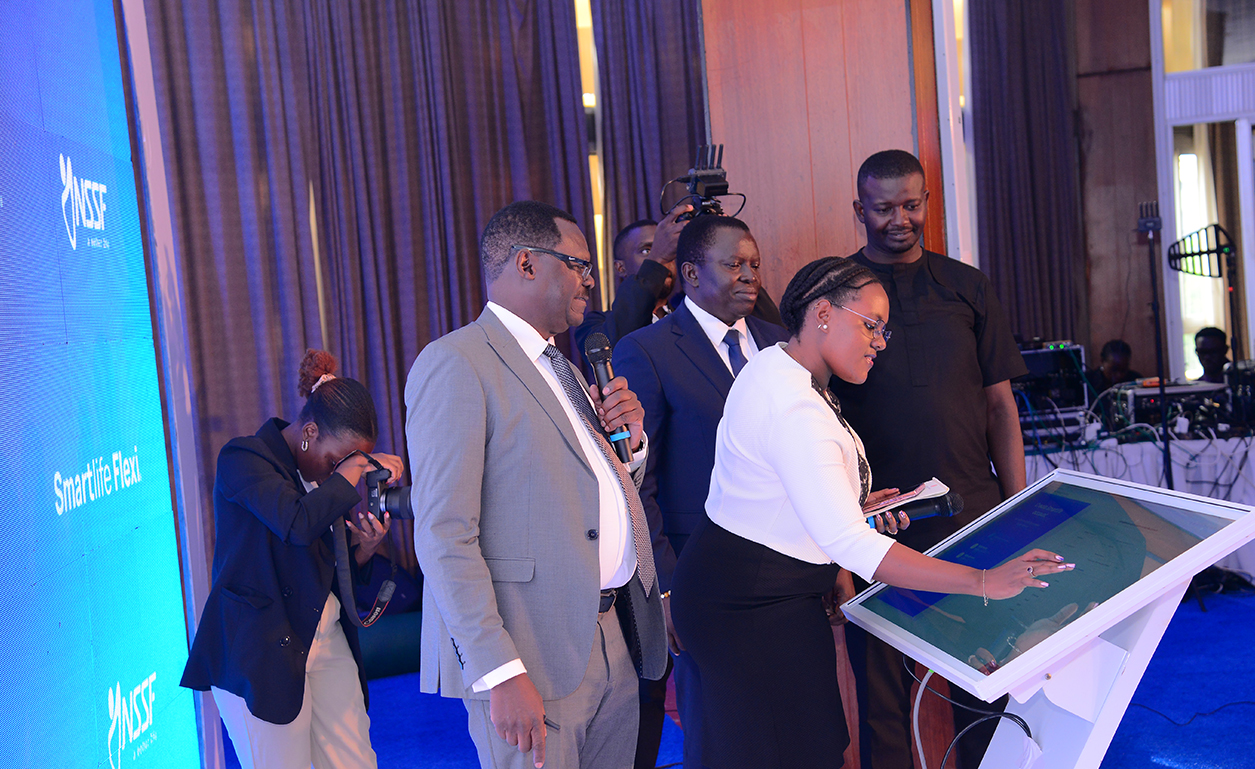
Vanessa was the first NSSF member to enroll for the NSSF Smartlife Flexi upon launch in November 2024. Smartlife Flexi is a flexible, goal-driven savings plan designed to help you achieve your financial goals on your terms. With the freedom to choose how much you save, when you contribute, and the length of your savings period, it’s as adaptable as you need it to be—all while earning a competitive monthly return, accrued daily. The product has since shown remarkable progress, with a total portfolio of Ugx 90 billion and 65,000 voluntary savers as of the end of January 2026.