How Kakira Sugar Limited Is Leading Social Security Inclusion in Agriculture
Wednesday, October 21 2026 4:00 pm
By Julius Businge, Financial Journalist



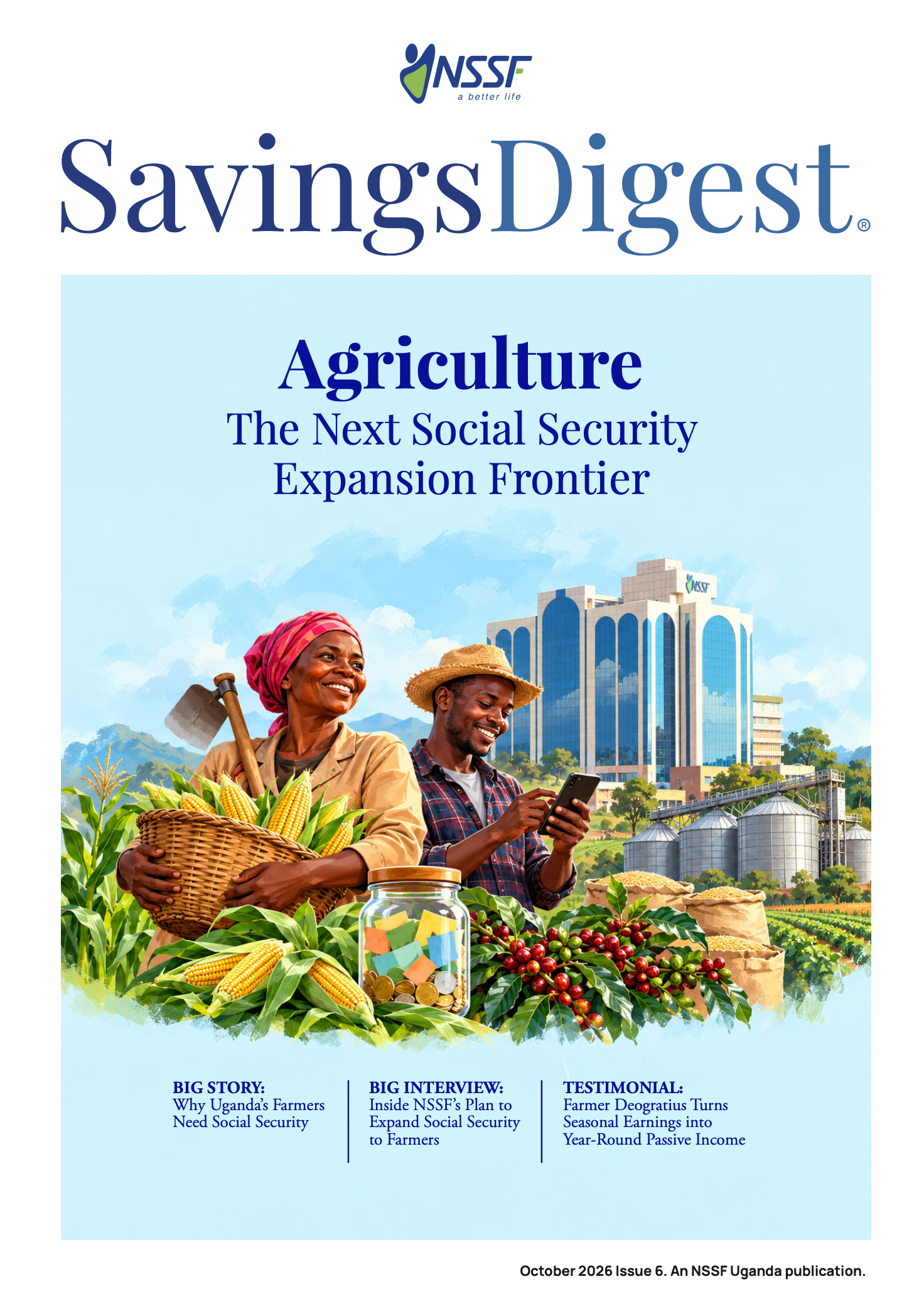
Uganda’s agricultural sector employs between 65% and 37.1% of the total working population, which equates to approximately 12 to 14 million people. It remains one of the country’s most important economic pillars.
Yet despite its significance, many workers in the sector still lack access to formal social security, leaving them vulnerable in retirement and during periods of economic uncertainty.
At Kakira Sugar Limited, one of Uganda’s largest agribusinesses, social security is viewed not as a statutory obligation but as a critical investment in people. The company has built a culture where saving for the future is integrated into employment, workforce welfare and business sustainability over the long term.
With more than 13,225 employees enrolled with The Fund and monthly contributions ranging between UGX 700 million and UGX 800 million, Kakira Sugar Limited stands out as one of the country’s leading contributors to social security and a powerful example of how agricultural enterprises can safeguard the future of their workers.
According to Susan N. Mataka, who until recently was the Human Resources Manager at Kakira Sugar Limited, social security is an essential component of responsible employment, particularly in sectors such as agriculture where work can often be seasonal and income patterns unpredictable.
“Kakira Sugar Limited is the largest employer in the country and therefore one of the largest contributors to NSSF. Our people are our number one asset. It is not only about business; it is about ensuring that those who contribute to our success are protected even beyond their working lives,” she said.
Beyond agriculture
Kakira Sugar’s operations demonstrate the evolving nature of modern agriculture. While many people associate the company solely with sugarcane growing, its business extends beyond farming.
Kakira has expanded into green energy generation, producing 52 megawatts of electricity from bagasse, a byproduct of sugarcane processing. The company also produces molasses, extra neutral alcohol, spirits and confectionery products. Its spirits have gained international recognition and are exported to markets including the United Kingdom and the United States.
Beyond its direct workforce, Kakira supports approximately 8,000 outgrower farmers who supply sugarcane to the company, creating an extensive agricultural ecosystem that supports livelihoods across eastern Uganda.
This combination of agriculture, manufacturing and value addition has enabled the company to maintain a large and stable workforce while demonstrating how agribusiness can contribute to national development.
Culture of saving
Long before social security became a major national conversation, Kakira had already embedded a savings culture within its workforce.
Mataka explained that the company has historically encouraged employees to save through cooperatives, gratuity arrangements and other internal mechanisms designed to support financial security.
“This company has always encouraged saving. Even before many modern systems existed, there was already a cooperative structure helping workers develop a culture of saving,” she said.
Today, that culture is reinforced through mandatory NSSF contributions and continuous financial literacy programmes.
Every October, the company dedicates time specifically to employee development and financial wellness. Workers receive training on personal financial management and how to maximise their NSSF benefits.
The objective is not merely to prepare employees for retirement but to help them build sustainable financial futures while they are still actively employed.
“The company conducts conversations on financial literacy, financial management, early retirement planning and how employees can prepare themselves to continue earning even after they leave formal employment,” Mataka explained.
These programmes have helped workers appreciate the importance of saving consistently and planning for life beyond active employment.
Workers benefit
The benefits of social security have extended beyond compliance. According to Mataka, one of the most visible outcomes has been employee retention.
Many workers joining Kakira from other organisations are often surprised to discover that their social security contributions are consistently remitted and that the company places significant emphasis on retirement planning.
The result has been workforce stability.
“Ninety-nine percent of our people do not resign and leave. Employees feel secure because they know their future is being protected,” she said.
The company currently has hundreds of employees who have worked well beyond the conventional retirement age, demonstrating strong employee loyalty and commitment over the long term.
Former employees also frequently express appreciation after accessing their NSSF benefits, Mataka says. Many return to thank the company for consistently contributing throughout their careers, often acknowledging that those savings have enabled them to establish businesses, support families and maintain financial independence in retirement.
“They tell us, ‘At least for you, people paid for me.’ When they eventually access their savings, they appreciate the value of what was contributed over the years,” Mataka said.
Moses Wesonga, a Mechanical Supervisor at Kakira Sugar Limited, says the company provides a conducive working environment and good employment conditions.
Wesonga, who has worked at Kakira since 2006, says the company has consistently remitted his NSSF contributions, with the employer contributing 10% of his salary and him contributing the mandatory 5%.
“I would like to see salaries increased so that my NSSF savings can grow while also enabling me to meet my day to day needs,” he says.
Beyond the mandatory NSSF contributions, Wesonga says he is willing to save more voluntarily with The Fund, provided the terms and conditions are clearly explained and products such as SmartLife are introduced in a way that employees can easily understand.
He also says he would be willing to continue making voluntary contributions to The Fund after retirement if the annual interest earned remains attractive.
The increasing use of digital platforms such as the NSSF mobile app has also made it easier for members to access services, track contributions and process benefits, further strengthening confidence in the system.
Sector leadership
As The Fund intensifies efforts to expand social security coverage across Uganda’s agricultural sector, Kakira’s experience offers valuable lessons for employers and workers alike.
Agriculture often presents unique challenges. Seasonal employment arrangements, casual labour and fluctuating production cycles can make social security planning more complex than in other sectors.
However, Mataka believes these challenges should not be used as an excuse for failing to comply.
“It starts with planning,” she said. “If you know the workforce you require and the duration they will be engaged, then social security contributions should form part of your budgeting process from the beginning.”
She argued that employers who invest in social security create more stable, productive and loyal workforces while helping employees secure their futures.
For employers who may find it difficult to implement traditional contribution arrangements, she encouraged consideration of voluntary savings options such as NSSF Smartlife Flexi.
“Of course, many people are still unaware of NSSF Smartlife Flexi, so the Fund should continue creating awareness about the product to increase its uptake,” Mataka said.
“If they cannot manage the traditional contribution structure, then they should encourage workers to save through Smartlife Flexi. Even small amounts saved consistently can make a difference over time,” she said.
Her message is important even for those not in large agricultural enterprises. Whether employing workers on farms, plantations, estates or even in households, employers have an opportunity to contribute to the financial security of those who help build their businesses.
“I do it even for my maid,” Mataka said. “Anyone employing another person should think about saving for them.”
As Uganda seeks to deepen social security coverage and extend protection to both formal and informal workers, agriculture represents one of the greatest opportunities for growth.
Kakira Sugar’s experience demonstrates that social security and agricultural productivity are not competing priorities. Rather, they are complementary investments that strengthen businesses, protect workers and contribute to national development.
By enrolling all its employees with The Fund, maintaining full compliance and encouraging a culture of saving for the long term, Kakira Sugar has shown what is possible when employers place people at the centre of their business strategy.
For the wider agricultural sector, the message is clear: growing crops is important, but securing the future of the people who grow them is equally essential.