Agriculture: The Next Social Security Expansion Frontier
Wednesday, October 21 2026 3:00 pm
By Victor Karamagi, Savings Digest Editor



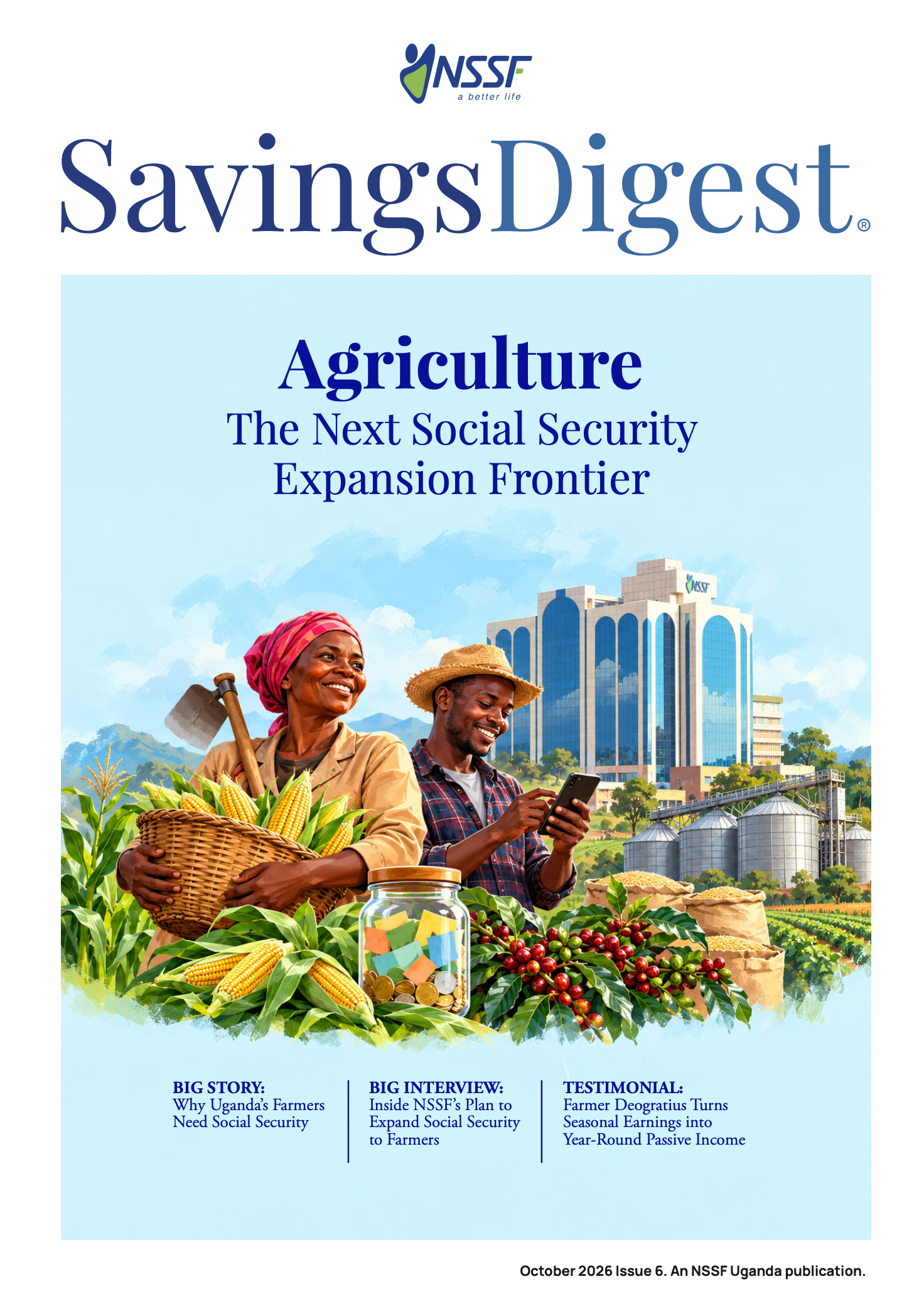
For decades, agriculture has been described as the backbone of Uganda’s economy. The sector remains a major contributor, accounting for approximately 26.2% of gross domestic product, according to the Uganda Bureau of Statistics (UBOS) Labour Market Survey 2025. Its 6.8% growth rate broadly matched the pace of expansion in the wider economy.
According to the 2024 National Population and Housing Census, more than 60% of Ugandan households are engaged in crop production, while 37% participate in livestock farming. However, subsistence farming still accounts for a significant share of agricultural activity, at 53%, compared with 17% for commercial agriculture. Agriculture currently accounts for approximately 37.1% of total employment.
Despite the sector’s scale and reach, social security coverage remains limited. Only about 1,300 agricultural employers are registered with The Fund, while contributions in the latest financial year were nearly UGX 60 billion from approximately 42,000 workers.
Several structural factors underpin this low coverage. Much of the sector relies on informal savings groups that may be vulnerable to fraud, against a backdrop of seasonal and volatile incomes.
These constraints, however, do not define the sector’s long term potential. Several developments could substantially expand social security coverage.
Recent social security reforms have removed key regulatory barriers to coverage in the agricultural sector. The Fund can now register employers regardless of workforce size, while sole proprietors and entrepreneurs are also eligible to enrol. Individuals may participate through the NSSF Voluntary Savings Plan, and the proposed Group Savings Plan is expected to broaden access further for agricultural workers and enterprises seeking entry into the formal social security system.
Public investment in agriculture is also increasing through higher direct budget allocations. Agro industrialisation received UGX 2.26 trillion this financial year, the largest allocation to date and an increase from UGX 1.8 trillion in the previous financial year.
Targeted interventions, including the Parish Development Model (PDM), the four acre model, support for agro processing, and value addition initiatives, are helping to address persistent supply side constraints.
The Fund’s market development and market access interventions, implemented alongside partner initiatives to stimulate demand, could accelerate formalisation, strengthen incomes, and expand the uptake of social security and other regulated savings products.
Together, these measures could bring more agricultural employers and workers into the formal social security system.