Why Aren’t You Investing In Treasury Bonds?
Tuesday, February 17 2026 12:32 pm
By Victor Karamagi, Editor



Esteemed Readers,
A recent October 2025 FinScope survey returned a startling revelation. Whereas the majority of respondents had a high level of self-assessed financial literacy, the survey showed a low level of objectively measured literacy. A significant majority have a limited understanding of concepts such as interest rates, inflation, and securities.
Worse, the survey also revealed that there is overestimation of financial literacy is particularly prevalent among younger people and those in the formal sector. Financial Education efforts by institutions such as NSSF, Bank of Uganda, and others are therefore not only timely but also of utmost importance.
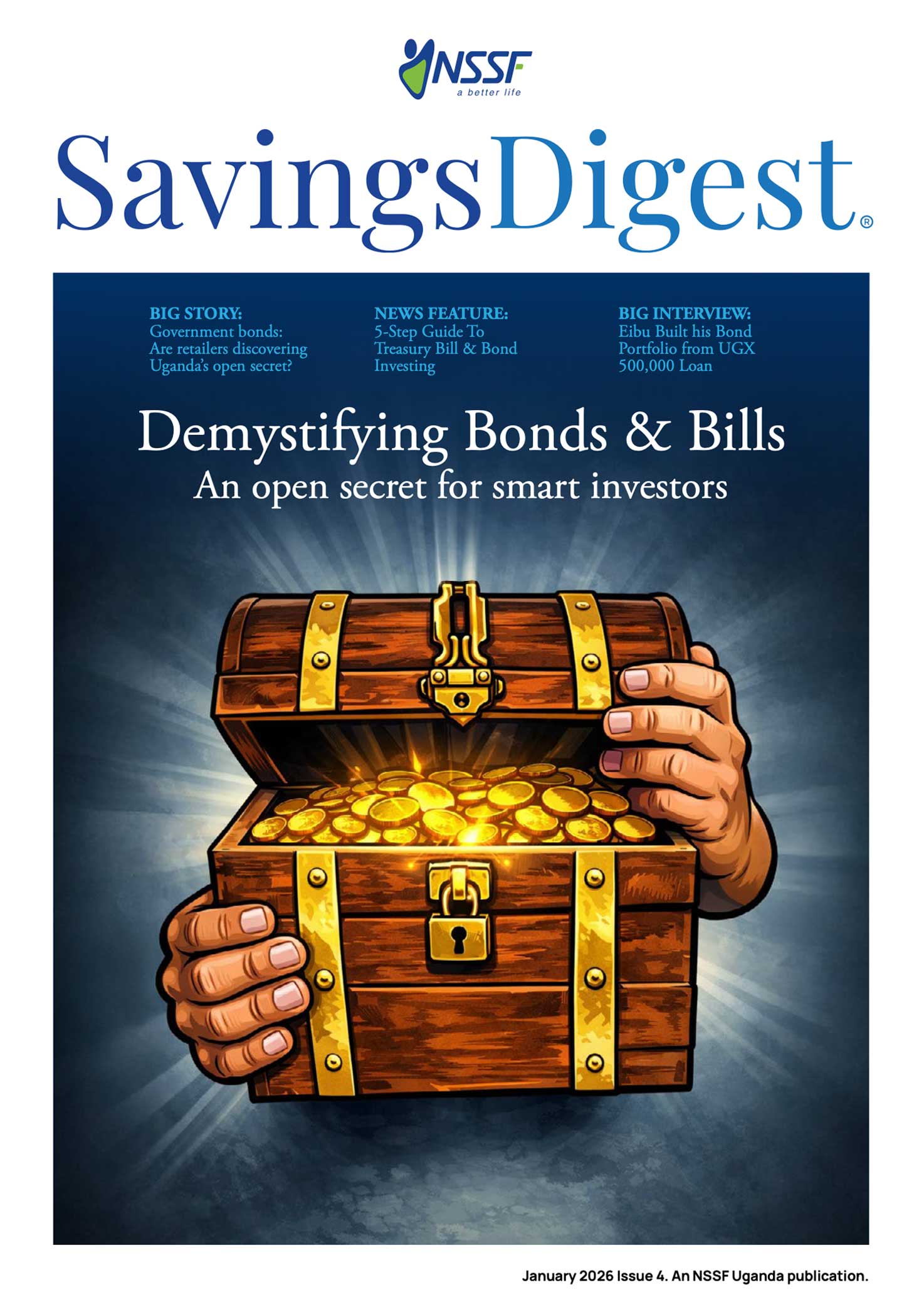
This insight, among other considerations, informed the focus on Government Treasury Bonds for this issue of the Savings Digest, given the consistently increasing attraction in the asset class by both individual and institutional investors.
The information contained herein is not advisory, but meant to highlight why the asset class is becoming all the more attractive in Uganda today, and why individual, alongside institutional investors, have a huge appetite for the asset.
To invest is a no-brainer. However, for the how, when, how long, and how much, we advise a sit-down with a Wealth Manager or Investment Advisor of your choice. There are many licensed players at an affordable rate in Uganda today.
Herein, our seasoned financial writers and experts focus on understanding why all the rage about treasury bonds today, the opportunities, and risks (if any). For individuals on the fence, ask yourself why an institutional investor like NSSF has over 75% of its portfolio on government treasury bonds, or why commercial banks have a huge appetite for the same.
In addition, ask yourself why investors look at bonds not only as a haven but also a strategic, forward-looking asset, providing predictable cash flow. The asset also serves as a counterweight to more volatile asset classes such as equities, and highly speculative ones like Real Estate, especially in a market like Uganda.
Whether you are a seasoned institutional investor or a retail saver building long-term security, government bonds remain a tool that can bring both balance and resilience.
We hope that in this issue, you will find the clarity, insights, and information to make you pick up the phone and call your financial advisor.